How to Choose a Property Developer in Limassol
6 min read
On this page
A property developer buys land, designs and builds homes on it, then sells or manages them, different from an agent, who sells existing homes on someone else's behalf, and different from a contractor, who builds to someone else's design. In a market as active as Limassol's right now, who you buy from matters as much as what you buy. Here's what a developer actually does, and what's worth checking before you commit.
What should you check before choosing a property developer in Limassol for your investment?
- Track record. How many projects has the developer actually completed and delivered, not just launched? Ask for addresses of finished developments, not renders of upcoming ones.
- Financial stability and land ownership. Ask whether the developer owns the site outright or has a mortgage against it. This isn't a minor detail: Cyprus's Department of Lands and Surveys can't issue individual title deeds while the land carries a bank charge, one of the most common reasons buyers in Cyprus have waited years for a deed. More than 130,000 properties were affected by exactly this problem before a 2015 remedial law gave buyers a bypass route.
- Title deed history. Ask a lawyer to check whether the developer's past projects have received clean, separate title deeds, and how long it took. A developer in good financial standing should be able to commit to a specific timeframe in writing, not "soon."
- Transparency on price and VAT. A clear, itemised price with VAT treatment and the full payment schedule stated upfront is a good sign. Vague pricing or pressure to sign quickly isn't.
- Build quality and after-sales support. Ask what happens if something needs fixing after you move in, and for how long. A developer who plans to manage the building long-term has a different incentive than one who disappears after the last unit sells.
- Local market knowledge. A developer building specifically in Limassol should be able to talk specifically about the neighbourhood, not just the project, why that street, what's changing around it, who else is buying there.
Why does Limassol have so many developers to choose from right now?
Limassol is in the middle of a genuine construction boom. Cyprus-wide building permits rose 19.5% in 2025 and were up 76.9% year-on-year in January 2026 alone, and Limassol district property sales in the first half of 2026 ran 20% ahead of the same period a year earlier. More developers are active, more projects are launching, and the range in quality, financial stability, and delivery track record between them is wider than it was a few years ago. That makes the choice of developer a bigger factor in a safe purchase than it used to be, not a smaller one.
What does a property developer do?
A developer typically handles the full lifecycle of a project: buying or securing the site, working with architects on the design, getting planning and building permits approved, managing or directly running construction, then delivering the finished homes. Many developers also stay involved after handover, applying for individual title deeds and managing shared building costs and common areas.
This is different from two roles buyers sometimes confuse it with. A real estate agent sells property on behalf of someone else, the developer or a private owner, and doesn't control design, construction, or delivery. A contractor builds to a design someone else has already approved, often working for the developer rather than the eventual buyer. When something goes wrong with a new-build property, it's almost always the developer's decisions, not the agent's or the contractor's, that caused it.
How can you check a developer's track record before buying off-plan?
Ask for the addresses of at least two or three completed projects and go and see them, not just the marketing photos. Ask how many units were delivered on the original promised timeline, and how the developer communicated if that slipped. Ask your own lawyer, not the developer's, to run a title search on a past project to confirm deeds were actually issued. None of this takes more than a few days, and it's the difference between judging a developer on its brochure and judging it on what it's actually delivered.
Where does SquareOne fit?
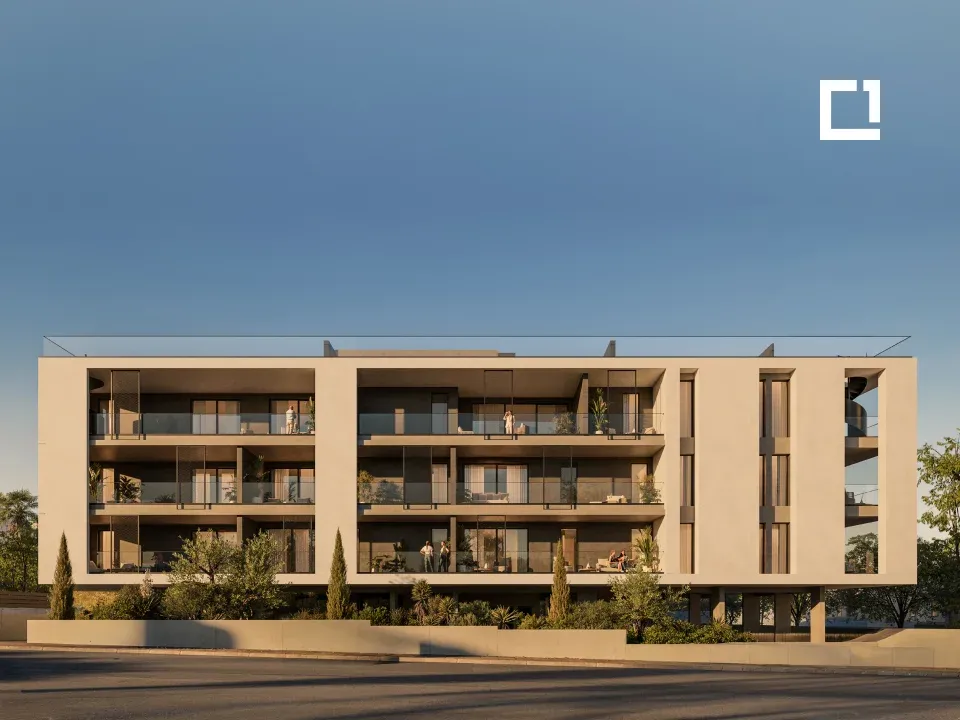
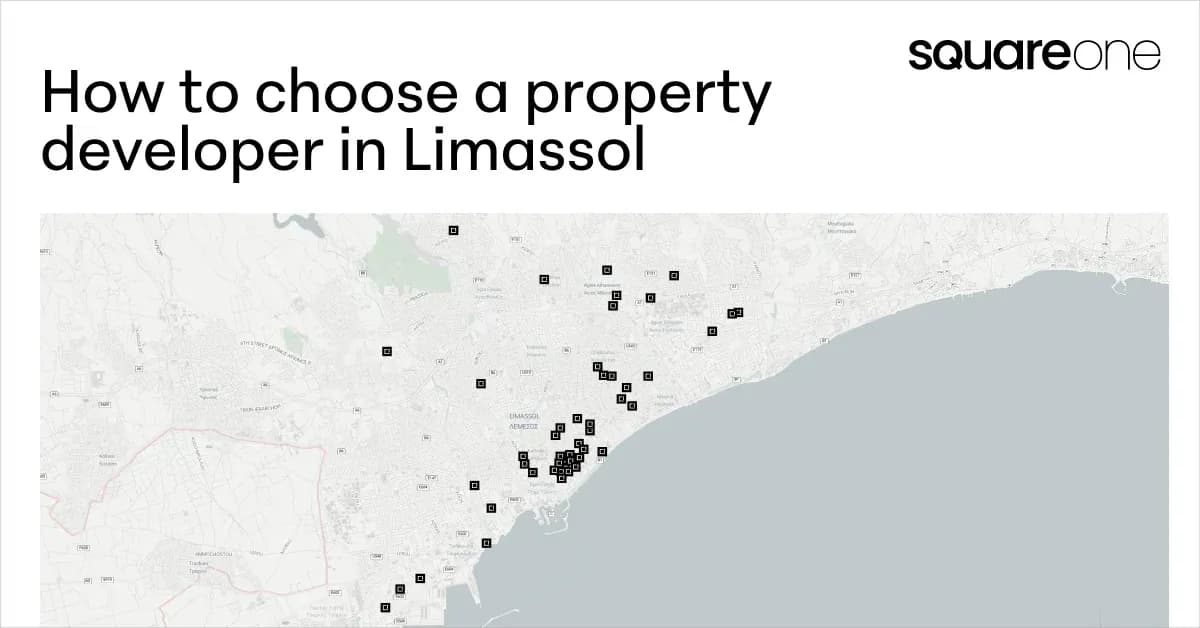
SquareOne is a Limassol-based developer active across several neighbourhoods in the city, including ZOIA in Kato Polemidia, APOLLO Residences in Kapsalos, SENA Residences in central Limassol, and IRIS in Agios Nektarios. If you're weighing us against other developers as part of your search, the criteria above apply to us too. Ask us the same questions you'd ask anyone else.
Browse current developments or see ZOIA, currently in active sales. Contact us if you'd like to talk through what's available.
For more on evaluating a purchase once you've shortlisted a developer, see our guides to calculating rental yield on a Limassol apartment, the best areas in Cyprus for rental yield, and buying off-plan in Cyprus.
What's the difference between a property developer and a real estate agent in Cyprus?
A developer buys land and builds the property; an agent sells property, often on behalf of a developer or a private seller, without controlling its design or construction. Problems with a new-build almost always trace back to the developer, not the agent who sold it.
Is buying off-plan from a developer riskier than buying a resale property?
It carries different risks, not automatically more of them. Off-plan buyers take on construction and delivery-timeline risk in exchange for a fixed price agreed today; resale buyers take on the condition and title history of an existing property. A financially stable developer with a clean delivery record reduces off-plan risk substantially.
How do I check if a developer's land is mortgage-free?
Ask your lawyer to run a title search at the Department of Lands and Surveys. It typically takes two to four working days and shows whether the land carries a bank charge, which is the main reason individual title deeds get delayed after handover.
Are property developers in Limassol regulated?
There's no single licensing body for developers the way there is for real estate agents. Developers operate under standard company law, need planning and building permit approval for every project, and buyers are protected under legislation including the 2011 Sale of Immovable Property Law, which gives buyers legal recourse if a developer causes delays.
How long should it take to get a title deed after a development is delivered?
For a financially sound developer on a mortgage-free site, 12 to 24 months after final approval is a reasonable expectation. Ask for a specific commitment in writing before you sign, not a verbal estimate.